
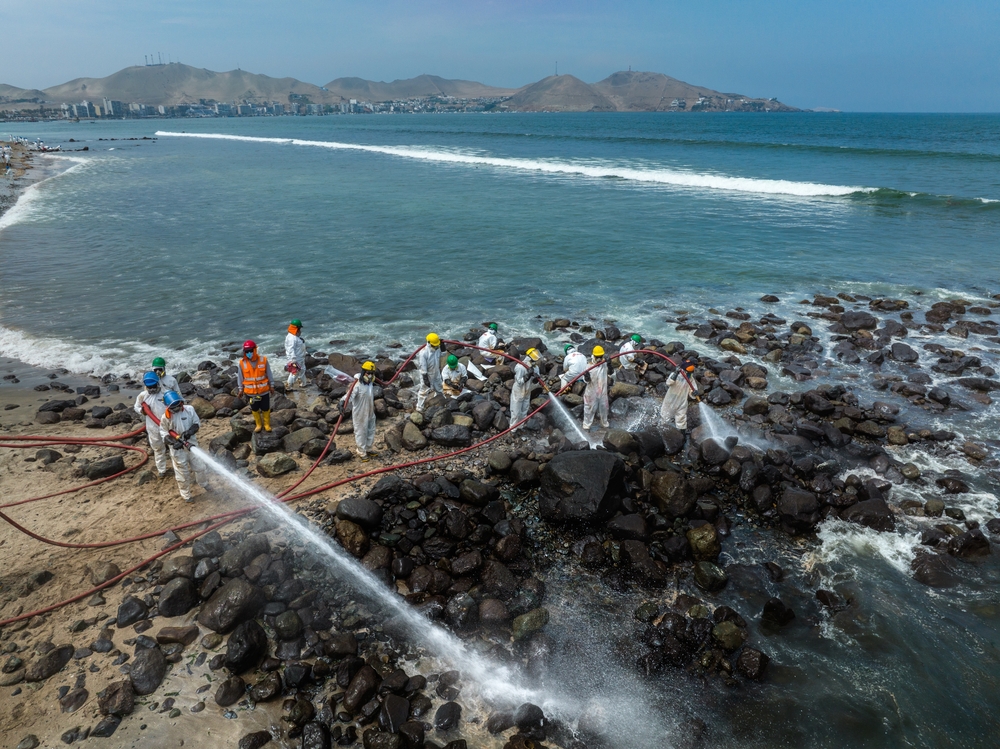
Certified Coastal Water Oil Spill Control – Refresher Course (CWOSC)
This 24-hour core course re-emphasizes hands-on capabilities for responding to oil spills in estuarine and coastal environments. It is designed for persons in industry, the regulatory community, and the emergency response disciplines who may be required to respond to an oil-spill incident. The course provides you with interesting and challenging response scenarios beyond basic response skills. Classroom time accounts for approximately six hours of training time. The remainder is hands-on field time with emphasis on booming strategy and tactics.
Course Description
This 24-hour core course re-emphasizes hands-on capabilities for responding to oil
spills in estuarine and coastal environments. It is designed for persons in industry,
the regulatory community, and the emergency response disciplines who may be
required to respond to an oil-spill incident.
The course provides you with interesting and challenging response scenarios
beyond basic response skills. Classroom time accounts for approximately six hours
of training time. The remainder is hands-on field time with emphasis on booming
strategy and tactics.
Learning Objectives
Boom and Skimmer Design and Function Containment and Cleanup Strategy and Tactics Large Scale Simulated Release Exercise Mobile Skimming Operations Multiple boom deployment operations to include Cascade booming operation, Vessel/Rig enclosure containment operation, Mobil booming operation Skimmer and Crude Oil Exercise Sorbents and chemical agents National Incident Management System (NIMS) Incident Command System (ICS) Communications Exercise Decontamination, Personal Protective Equipment (PPE) and Hazardous Waste Operations Emergency Response (HAZWOPER) Issues Natural Resource Damage Assessment (NRDA) and Shoreline Assessment Issues
Who Should Attend
First responders Construction Managers Building Contractors Safety Supervisors Hazardous Waste Managers Training Managers Industrial Hygienists Government employees Any other individuals who may be tasked with responding to oil-spill incidents
Related Courses


